
Thermal test companies in Bangladesh use infrared cameras to find hot spots in electrical panels, cables, connections and equipment while they run under load. TOTO POWER Engineering carries out thermal scanning (thermography) to detect loose connections, overloads and failing components before they cause breakdowns or fires, and reports each finding with a thermal image.
Last updated: 7 October 2026
If you are comparing thermal test companies in Bangladesh, you need a service provider that understands the technical and quality aspects as well as the reality of business operations. In Bangladesh, a great many factories, commercial buildings and industrial plants rely on safe electrical systems and thermal testing to keep running. That is why professional thermal testing has become so important.
TOTO Power Engineering provides on-site thermal testing services in Bangladesh for clients who need precise inspection, clear analysis and reliable support. Using infrared thermography, we scan electrical panels, cables, connections, transformers, motors and other equipment while they are running, to find abnormal heat before it turns into a failure. This service is part of our wider testing and inspection services.
We have helped many businesses identify heat-related issues in their equipment and electrical components, based on years of hands-on experience. Thermal testing shows how heat is distributed across equipment under real operating conditions, which helps engineers, factory owners and technicians make better-informed decisions about safety, efficiency and performance.
We always aim to provide a practical service with clear reporting and professional support. Our goal is not only to complete the test but also to help clients understand the condition of their systems and take the right action at the right time.
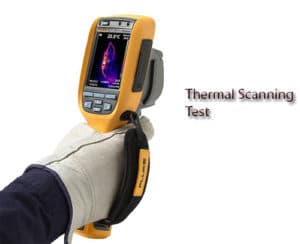
A thermal test shows how heat is distributed over the surface of a machine, panel, cable or other electrical apparatus. It provides evidence of the normal state of a component and also reveals overheating caused by a hidden fault.
In a thermal inspection, an infrared (thermographic) camera captures the heat radiated by a machine, panel, wire or surface and turns it into a thermal image, often called a heat map. The heat map makes it easy to see hot spots, areas of unusual heat and components that need attention.
This is very useful because many problems cannot be seen with the naked eye at an early stage. For example, a thermal test can detect overheating components, poor joints, damaged insulation and other faults that need attention before they result in something worse. When a problem is detected, the technician assesses its severity and recommends the next action, whether that is a repair, maintenance or replacement.
For this reason, thermal testing is widely used in industry, electrical maintenance and quality inspection in Bangladesh.
Electrical thermography testing is crucial because many electrical faults begin with heat. The first sign of an impending failure is often a rising temperature in a wire, connection, switch or panel. If this abnormal heat is detected in good time, the business can be saved from major damage.
In Bangladesh, many industrial and commercial businesses depend on a continuous power supply and safe electrical operation. One small electrical fault can create big trouble in factories, garment units, offices, hospitals and production plants, and most of these faults show up as heat first.
Electrical thermography testing lets you find these problems before they cause a fire, equipment failure or a costly shutdown. That is why thermal inspection is an important part of preventive maintenance and helps keep working conditions safe.
Done regularly, thermal testing also helps control maintenance costs, because repairs can be planned instead of carried out in an emergency. It protects valuable equipment, improves reliability and gives business owners peace of mind. Any business that wants to maintain electrical safety and avoid unexpected interruptions should consider thermography testing.
| What the camera shows | Likely cause | Typical action |
|---|---|---|
| One hot terminal or lug | Loose, corroded or undersized connection | Clean, re-terminate and tighten to the correct torque |
| One phase warmer than the others | Load imbalance or a high-resistance contact | Rebalance loads and check breaker or contactor contacts |
| Whole cable or busbar warm along its length | Overload or undersized conductor | Review the load and the cable or busbar rating |
| Hot fuse body or breaker | Internal deterioration or poor seating | Replace the device and check its holder |
| Hot motor bearing or coupling | Lubrication problem or misalignment | Mechanical maintenance and alignment check |
A thermal test technician is a trained professional who carries out thermal inspections and studies temperature patterns using infrared cameras and other instruments. The technician's primary role is to identify faults that cause abnormal heat and to understand what the temperature differences mean.
A skilled technician does more than take thermal images. They study the results in detail, compare temperature differences between similar components and determine the probable cause of each issue. This requires technical knowledge, field experience and proper training.
Many thermal technicians receive training in infrared thermography and non-destructive testing methods, and their qualifications vary with their certification and experience. The accuracy of a thermal inspection therefore depends heavily on the skill of the person carrying it out.
When clients hire us for thermal testing services in Bangladesh, they can be assured that the inspection is carried out by trained and responsible professionals. Safety, accuracy and service quality always come first, so that clients receive reliable results for their business or facility.
We quote each job individually. The main factors are the number of panels, transformers and machines to be scanned, the size and layout of the site, whether high-voltage equipment is included, any access or permit-to-work arrangements and the level of detail required in the report. Combining thermography with other electrical tests on the same visit usually reduces the overall cost. Contact us with your equipment list for a quotation.
Thermography supports the inspection and maintenance of low-voltage installations designed to IEC 60364 and BNBC 2020, and it is a standard part of electrical safety assessments for DIFE inspections and buyer audits in the RMG sector. Findings are classified using recognised temperature-difference criteria for electrical equipment, and the scan is always carried out under safe working procedures for live equipment.
There are many thermal service providers in the market. Clients choose us for quality work, honest service and practical support. We know that every client wants dependable, affordable test results and transparent information.
As a local service provider in Bangladesh, we understand the needs of our industrial and commercial clients. We work with care and responsibility on everything from a small inspection job to a large preventive maintenance programme, and our team always aims to deliver on time.
We believe thermal testing is not just about producing a report. It is about helping the client protect their equipment, reduce risks and keep operations running smoothly.
Another reason to choose us is our commitment to long-term client satisfaction and to providing a helpful, dependable and cost-effective service. If you want a partner you can trust for thermal test maintenance in Bangladesh, we are ready to support you with the right solution.
A professional thermal inspection can prove vital for your business. It helps you stay prepared, avoid unnecessary problems and keep working conditions safe. If you want to know more about our thermal testing and maintenance services, get in touch with us today.
Thermal test companies inspect electrical and mechanical equipment with an infrared camera while it runs under load. Typical targets are LT and HT panels, busbars, breakers, cable terminations, transformers, generators, capacitor banks, motors and bearings. The camera shows temperature differences that point to loose connections, overloads, unbalanced phases or failing components, so they can be repaired before they cause a breakdown or fire.
No. Thermography is done while the equipment is energised and carrying a normal load, because faults only produce heat when current flows. Panel covers may need to be opened under controlled conditions so the camera can see the components, which is why our technicians follow safe working procedures and work with your electrical staff. No production shutdown is needed for the scan itself.
Most facilities include thermography in their preventive maintenance plan and repeat it periodically, with critical panels scanned more often. It is also useful after major electrical changes, before buyer or compliance audits, and before the peak summer load. Comparing each survey with the previous one shows whether a hot spot is getting worse and whether earlier repairs were effective.
Each finding is shown with a thermal image and a normal photograph of the same component, its location, the measured temperatures and the load at the time of the scan. Findings are classified by severity so you know what to repair immediately and what can wait for planned maintenance. The report ends with a summary list of recommended corrective actions.
The cost depends on the number of panels and items to be scanned, the size and layout of the site, whether high-voltage equipment is included, the access and safety arrangements needed and how detailed the report must be. A single distribution room costs far less than a full factory survey. Contact us with an equipment list for a quotation.
Yes. Thermography is one of the core tests in an electrical safety assessment, together with earth resistance testing, insulation resistance testing and a visual inspection of the installation. Buyers and auditors often ask for a recent thermography report, because hot connections are one of the most common causes of electrical fires in factories and commercial buildings.
