

On-Grid Solar System in Bangladesh
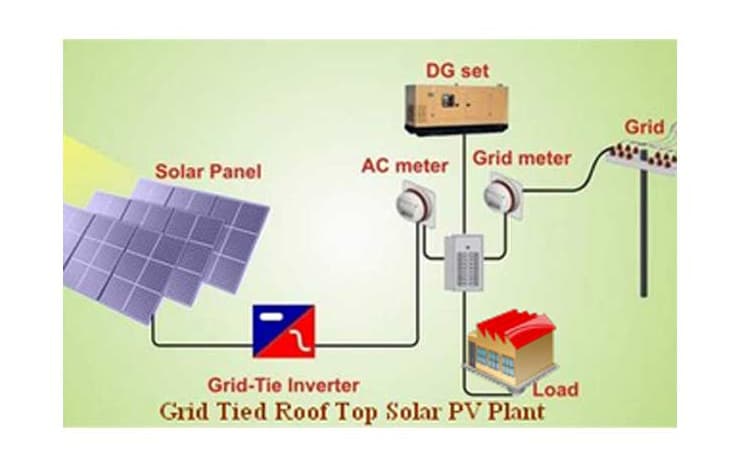
An on-grid solar system in Bangladesh is a grid-tied photovoltaic installation with no batteries. Solar panels produce DC power, a grid-tie inverter converts it to AC synchronised with the utility supply, and the building uses that energy first. When solar output is low, the grid supplies the balance. During a grid outage the inverter shuts down for safety.
An on-grid solar system in Bangladesh is the simplest way for a building with a reliable grid connection to cut its electricity bills with solar power. It has no batteries to buy or replace, and every unit of energy it generates during the day replaces a unit bought from the utility. TOTO POWER Engineering, an engineering consultancy since 2011 and enlisted with DIFE, designs and installs on-grid systems for factories, offices and homes as part of our solar systems work.
What is an on-grid solar system?
An on-grid, or grid-tied, solar system connects solar panels to the building's electrical supply through a grid-tie inverter. The inverter converts the panels' DC output into AC at the same voltage and frequency as the grid, and continuously synchronises with it. The building's loads draw from solar first; whatever solar cannot supply is drawn from the grid automatically, with no switching and no interruption.
Because there is no battery, energy cannot be stored for the evening. That is why on-grid systems suit buildings that use most of their power during daylight hours, such as factories, offices, schools and shops.
Anti-islanding protection
When the grid fails, a grid-tie inverter must detect the loss of supply and stop feeding power within a short time. This anti-islanding function protects utility staff working on lines they believe are dead. It also means that a pure on-grid system does not supply power during load shedding. Distribution utilities check this protection before approving a connection.
On-grid vs off-grid vs hybrid solar systems
| Feature | On-grid | Off-grid | Hybrid |
|---|---|---|---|
| Grid connection | Required | None | Usually yes |
| Batteries | No | Yes | Yes |
| Power during outage | No (anti-islanding) | Yes, from batteries | Yes, for backed-up loads |
| Relative cost and complexity | Lowest | Higher | Highest |
| Maintenance | Low | Battery care and replacement | Battery care and replacement |
| Best for | Daytime loads on a reliable grid | Sites without a grid | Critical loads that need backup |
For sites without a grid or with critical loads, see our solar hybrid and mini-grid systems.
How does on-grid solar relate to net metering?
Every net metering installation is an on-grid system, but not every on-grid system needs net metering. If your system is sized so the building consumes nearly all of the solar energy it generates, the main benefit is self-consumption: lower energy bought from the grid. If the system will sometimes generate more than the building uses, for example on weekly holidays in a factory, the surplus can be credited through the SREDA net metering arrangement with your distribution utility. Export, billing credit and the application process are explained on our net metering solar system page. This page focuses on the system itself.
Who uses on-grid solar systems?
- Factories, especially RMG and textile units with large roofs and daytime production.
- Offices and commercial buildings where air-conditioning and lighting peak during working hours.
- Homes with daytime loads and suitable roof space.
- Institutions such as schools and hospitals that want to reduce grid consumption while keeping existing backup generators.
How is an on-grid solar system sized?
Load profile
We review twelve months of electricity bills and, for larger sites, record the load over typical working and non-working days. The aim is to match generation to daytime demand, so that little energy is wasted or exported without credit.
Roof area
The usable area excludes shaded zones, access paths, water tanks, skylights and edges kept clear for wind and maintenance. Orientation and tilt are chosen to maximise yearly output at Bangladesh's latitude.
Sanctioned load and connection
The system size must be compatible with the sanctioned load and the capacity of the transformer, main switchboard and incoming cables. Utility rules may limit how large a grid-connected system can be relative to sanctioned load, so this is checked early.
What are the components of an on-grid solar system?
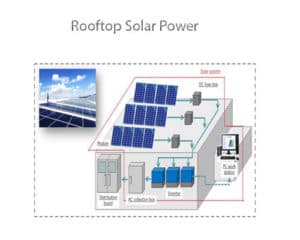
- Solar PV modules arranged in strings
- Mounting structure designed for the roof type and wind load
- Grid-tie inverter(s) with anti-islanding and grid protection
- DC combiner boxes, DC isolators and DC surge protection devices
- AC distribution board with breakers, isolator and AC surge protection
- Solar DC and AC cables, cable trays and conduits
- Earthing system and, where required, lightning protection
- Energy meter and a monitoring system
How is an on-grid solar system installed?
- Site survey. Roof inspection, shading assessment, distribution board review and cable route planning.
- Structural roof check. Our structural design team confirms the slab, purlins or trusses can carry the array and wind uplift, and specifies the fixing method.
- Electrical design. String sizing, inverter selection, cable sizing, protection and a single-line diagram for the connection point.
- Approvals. Where the utility must be informed or approve the connection, we prepare the documents.
- Mounting and module installation. Frames are fixed and sealed to protect waterproofing, then modules are mounted and wired.
- Inverter, protection and earthing. Inverters, isolators, surge protection and earthing conductors are installed and connected.
- Testing and commissioning. Polarity, open-circuit voltage, insulation resistance, earth resistance and inverter protection settings are tested before the system is energised.
- Handover. Documents, monitoring access and operator training.
Why do earthing and lightning protection matter?
A rooftop array adds a large area of metal at the top of the building, connected by cables to the main distribution board. Without correct earthing, a fault can make frames live; without surge protection, a nearby lightning strike can destroy inverters and damage other equipment. Module frames and mounting structures must be bonded to earth, and the lightning protection system should be reviewed so the array sits within its protected zone, following IEC 62305. Earth resistance can be verified with an earth resistance test.
What you receive
- Site survey and load assessment report
- System design, array layout and single-line diagram
- Structural roof check findings and mounting details
- Equipment datasheets and warranty documents
- Testing and commissioning records
- Monitoring access and an operation and maintenance guide
How is an on-grid solar system maintained?
Maintenance is simple but should be planned. Panels are cleaned regularly, more often in the dusty dry season. Connections, isolators and inverters are inspected, and thermal testing identifies hot joints. Earthing and surge protection are checked periodically, and daily generation is compared with expected output so a fault is spotted quickly.
Which standards apply?
On-grid installations follow BNBC 2020 for the building and its electrical work, IEC 60364 for low-voltage installations, IEC 62305 for lightning protection and the connection requirements of your distribution utility. Where energy will be exported for credit, the SREDA / BERC Net Metering Guideline 2018 also applies.
What does an on-grid solar system cost in Bangladesh?
The cost depends on the system size, the panels and inverters chosen, the mounting structure and any roof repair or strengthening, cable lengths between the roof and the main board, protection and earthing work, monitoring, and any utility connection requirements. Because there are no batteries, on-grid systems are usually the most economical type of solar system. We survey the site and send a written quotation.
Why choose TOTO POWER Engineering?
We design solar systems as part of the building's electrical and structural safety, drawing on our structural design, electrical design, lightning protection and testing teams. That reduces the risk of a solar installation becoming a finding in your next electrical safety assessment. Our engineers work from Dhaka and Chittagong.