

Solar Company in Bangladesh
A solar company in Bangladesh surveys your site, designs a photovoltaic system to match your electricity use, supplies panels, inverters and mounting structures, installs and connects the system safely, and maintains it afterwards. TOTO POWER Engineering delivers rooftop, on-grid, net metering, hybrid, irrigation and utility-scale solar systems for factories, businesses and homes.
As a solar company in Bangladesh, TOTO POWER Engineering approaches solar as an engineering project rather than a box of equipment. We have worked as an engineering consultancy since 2011, are enlisted with the Department of Inspection for Factories and Establishments (DIFE), and bring electrical design, structural checks and safety testing to every installation. Our Dhaka and Chittagong teams serve factories, commercial buildings, homes and farms.
Our solar systems
Each system type has its own page with details of how it works, its components and who it suits. Use the list below to find the one that matches your site.
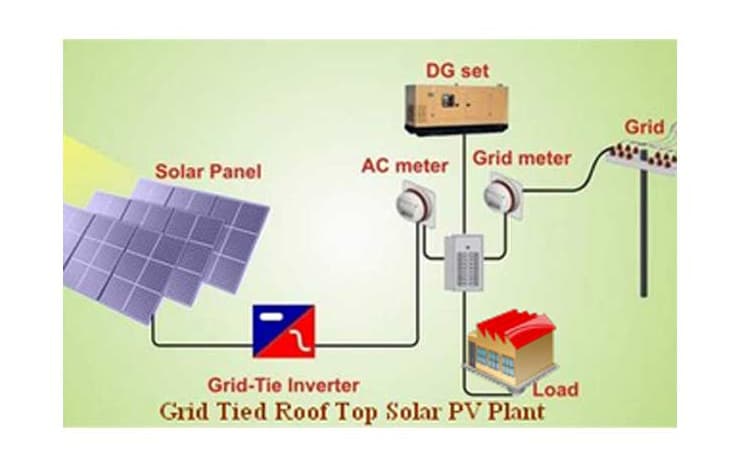
- On-grid solar system – Grid-tied system without batteries that cuts daytime bills for factories, offices and homes.
- Net metering solar system – On-grid system with a bi-directional meter, so surplus energy exported to the grid is credited on your bill.
- Rooftop solar system – Panels mounted on a building's roof to supply its own load, the most common choice for industrial and commercial buildings.
- Solar irrigation pump system – A PV array driving a pump through a pump inverter, replacing diesel or grid power for farm irrigation.
- Solar hybrid mini, micro and nano grids – Solar with batteries and often a generator, supplying communities or sites that the national grid does not reach reliably.
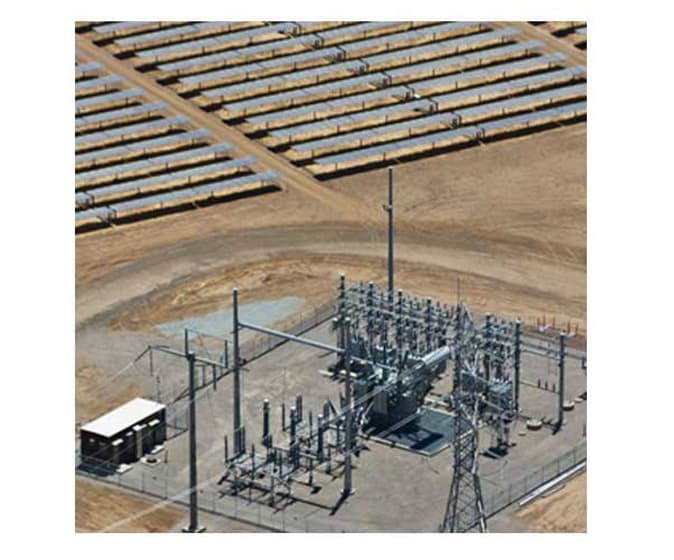
- Utility-scale solar plant – Large ground-mounted plants that feed power into the national grid through transformers and substations.
- Energy audit – A study of how your facility uses energy, so solar is sized correctly and combined with efficiency savings.
What does a solar company in Bangladesh do?
A complete solar project has several stages, and the quality of each one affects how much energy the system produces and how safely it runs for the next two decades or more. A solar company should cover the energy study, the electrical and structural design, the supply of matched components, installation, testing and commissioning, the grid connection paperwork, and maintenance. When one of these steps is skipped, the usual results are an oversized or undersized system, roof leaks, inverter trips, overheating cable joints or a net metering application that stalls.
How do solar systems in Bangladesh compare?
Solar systems in Bangladesh fall into a few main types. The right choice depends on whether you have a reliable grid connection, when you use most of your electricity, and whether some loads must keep running during outages.
| System type | How it works | Battery? | Best for |
|---|---|---|---|
| On-grid | Grid-tie inverter feeds solar power to on-site loads alongside the grid | No | Factories, offices and homes with high daytime use |
| Net metering | On-grid system with a bi-directional meter that credits exported energy | No | Sites that sometimes generate more than they use |
| Off-grid | Panels charge batteries that supply loads with no grid connection | Yes | Remote buildings, telecom sites, isolated homes |
| Hybrid / mini-grid | Solar, batteries and often a generator, with or without grid connection | Yes | Critical loads needing backup; islands and remote communities |
| Solar irrigation | PV array drives a pump through a pump inverter while the sun shines | Usually no | Farms and irrigation schemes replacing diesel pumps |
| Utility-scale | Large ground-mounted array exporting to the grid through transformers | Optional | Power producers and large land-based projects |
How to choose among solar systems in Bangladesh
If you are comparing the best solar systems in Bangladesh, the brand of panel matters less than the engineering behind the installation. Work through these points with any supplier.
Site survey and load profile
A proper survey records your monthly bills, sanctioned load, operating hours and how the load varies through the day. For factories, an energy audit often reveals savings that reduce the size of solar system you need. The survey also records roof area, orientation and access routes for maintenance.
Roof structural check
Panels and frames add permanent weight, and storms add uplift. Before installation, a structural engineer should confirm that the roof slab, steel purlins or trusses can carry the array, and decide how it is fixed without damaging waterproofing.
Shading
Water tanks, parapets, neighbouring buildings and trees can shade part of an array. Even partial shade can reduce the output of a whole string, so the layout should avoid shaded areas or use string design and inverter features that limit the loss.
Panel and inverter quality
Ask for the datasheets and test certificates of the panels and inverters, the warranty terms, and whether local service support exists. Check that the inverter has the grid protection functions your distribution utility requires.
Electrical safety, earthing and lightning protection
A solar array is a large metal structure on the highest point of a building. It needs correct DC cable sizing, DC and AC isolation, surge protection, earthing and, where required, a lightning protection system designed to IEC 62305.
Net metering application
If you want credit for exported power, the application goes to your distribution utility under the SREDA net metering guideline. The utility checks the documents, inspects the installation and fits or approves a bi-directional meter. See our net metering solar system page for details.
After-sales service
Dust and bird droppings reduce output, connections loosen and inverters log faults. Choose a company that offers cleaning, inspection, thermal scanning of connections and monitoring of performance after handover.
How is a solar project delivered?
- Enquiry and data collection. You share electricity bills, the sanctioned load and roof or land details.
- Site survey. Engineers inspect the roof or land, shading, the main distribution board and the cable route.
- Design and proposal. We size the array and inverters, check the structure, prepare the single-line diagram and give a written proposal.
- Approvals. Where net metering or a grid connection is involved, we prepare the documents for the distribution utility.
- Installation. Mounting structure, panels, inverters, cabling, protection and earthing are installed by our team.
- Testing and commissioning. Insulation resistance, polarity, earthing and inverter protection settings are tested before the system is energised.
- Handover and maintenance. You receive the documents and training, and we agree a maintenance schedule.
What you receive
- A site survey report and load assessment
- System design with array layout and single-line diagram
- Roof structural check findings and mounting details
- Equipment datasheets and warranty documents
- Test and commissioning records
- Net metering documents where applicable
- An operation and maintenance guide
Which standards apply?
Solar installations in Bangladesh follow BNBC 2020 for the building structure and electrical work, IEC 60364 for low-voltage installations, IEC 62305 for lightning protection, and the SREDA / BERC Net Metering Guideline 2018 for grid-connected systems that export energy. The distribution utility may set additional connection requirements.
What does a solar system cost in Bangladesh?
The price depends on system size and type, whether batteries are needed, the mounting structure and any roof strengthening, the distance between the array and the main distribution board, the panels and inverters chosen, and the grid connection work. We survey first and quote in writing, so you see the cost of each part before you decide.
Further reading
For background, read our earlier articles on choosing a solar company in Bangladesh and on the different types of solar system in Bangladesh.
Why choose TOTO POWER Engineering?
We combine solar installation with electrical design, structural engineering, lightning protection and electrical testing in one firm, with more than 500 projects completed across our services. That lets us treat your solar system as part of the building's electrical and structural safety, not as an add-on.