

Risk Assessment Firm in Bangladesh
A risk assessment firm in Bangladesh identifies hazards in a factory, building or worksite, judges how likely and how severe each one is, and recommends controls. TOTO POWER Engineering assesses structural, electrical, fire and occupational risks, ranks them on a risk matrix and gives owners a prioritised action plan aligned with Bangladesh Labour Rules.
A risk assessment firm in Bangladesh helps owners answer a simple question with evidence: what on this site could seriously hurt someone, and what are we doing about it? TOTO POWER Engineering is an engineering consultancy that has been operating since 2011 and is enlisted with the Department of Inspection for Factories and Establishments (DIFE). Our engineers assess factories, warehouses, commercial buildings and construction sites, combining structural, electrical, fire and occupational safety expertise in one team.
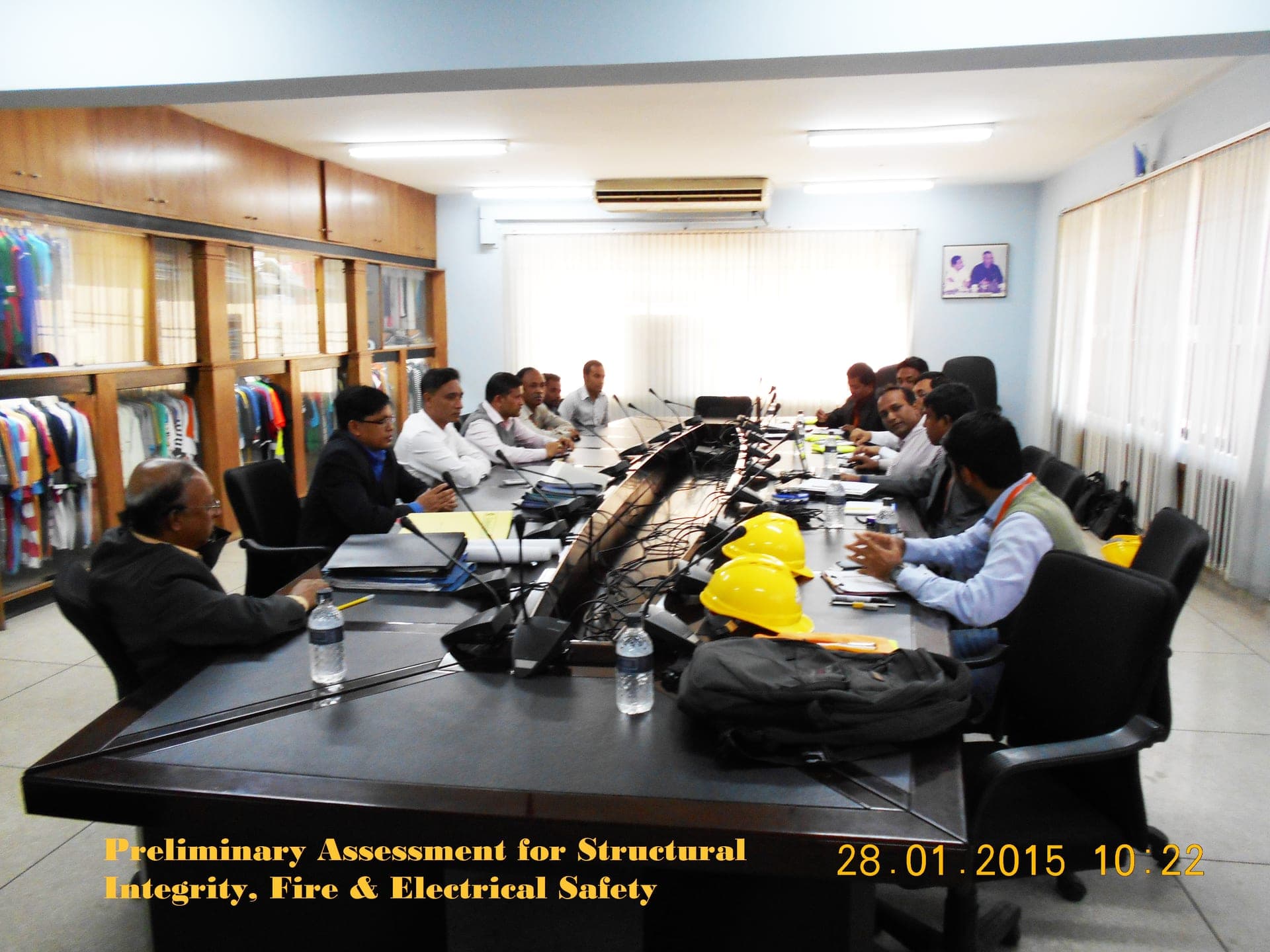
What is an engineering risk assessment?
A risk assessment is a structured look at the work and the workplace to find hazards, decide how likely each one is to cause harm and how serious that harm would be, and then decide whether existing controls are enough. A hazard is anything with the potential to cause harm, such as an overloaded slab, an exposed busbar, a locked exit or an unguarded machine. Risk combines the chance of harm with its severity.
An engineering risk assessment goes beyond a general checklist. Because our assessors are engineers, they can recognise when a crack is structural rather than cosmetic, when a cable is undersized for its load, or when a fire exit route fails to meet the travel distance that a building of that occupancy needs. That technical judgement makes the ratings more reliable and the recommended controls more practical.
Who needs a risk assessment?
- RMG, textile and other factories that must show DIFE and export buyers how workplace hazards are controlled.
- Owners planning a change, such as new machinery, an extra floor, a new warehouse, or the storage of flammable materials.
- Construction sites where excavation, work at height, temporary works and lifting operations need to be planned safely.
- Commercial building managers responsible for tenants, visitors and contractors working on the premises.
- Investors and insurers that need an independent view of the risks before buying, leasing or insuring a property.
Which risks do we assess?
Structural risks
Cracks, deflection, overloading of floors, unauthorised additional storeys, heavy machines on slabs not designed for them, water damage and corroded reinforcement. Where a structural concern is serious, we recommend a structural safety assessment with testing.
Electrical risks
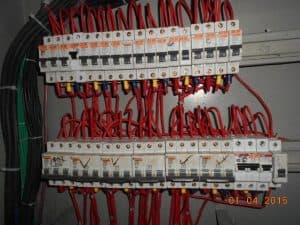
Overloaded circuits and panels, poor earthing, missing protective devices, damaged cables, hot spots and unsafe working practices around live equipment. These are examined in more depth in an electrical safety assessment.
Fire risks
Ignition sources, storage of combustible materials, blocked or locked exits, inadequate detection and alarm, missing or unserviced extinguishers and hydrants, and weak evacuation arrangements. See our fire safety assessment for the detailed fire audit.
Occupational and process hazards
Machine guarding, manual handling, work at height, confined spaces, chemical storage, noise, heat, lighting, boiler and pressure vessel operation, lifts and lifting equipment, and housekeeping that affects slips, trips and falls.
How is a risk assessment done?
- Establish the context. We agree the scope, the buildings and processes included, and the people who may be affected, including workers, visitors and neighbours.
- Hazard identification. Engineers walk through every area, observe work in progress, interview supervisors and workers, and review drawings, maintenance records and accident logs.
- Risk analysis. For each hazard we rate likelihood and severity, taking existing controls into account.
- Risk evaluation. The ratings are placed on a risk matrix to decide which risks are acceptable and which need action, and how urgently.
- Risk treatment. We recommend controls following the hierarchy of elimination, substitution, engineering controls, administrative controls and personal protective equipment.
- Report and action plan. Findings are compiled into a risk register and a time-bound action plan with responsible persons.
- Monitoring and review. We can verify that actions are complete and reassess when the site changes.
How does the risk matrix work?
We use a five-by-five matrix. Likelihood and severity are each scored from 1 to 5, and the product gives a risk score that sets the priority. The exact scoring is agreed with the client before the assessment so that results are consistent with their own safety system.
| Likelihood \ Severity | 1 Negligible | 2 Minor | 3 Moderate | 4 Major | 5 Catastrophic |
|---|---|---|---|---|---|
| 5 Almost certain | 5 Medium | 10 High | 15 High | 20 Extreme | 25 Extreme |
| 4 Likely | 4 Low | 8 Medium | 12 High | 16 Extreme | 20 Extreme |
| 3 Possible | 3 Low | 6 Medium | 9 Medium | 12 High | 15 High |
| 2 Unlikely | 2 Low | 4 Low | 6 Medium | 8 Medium | 10 High |
| 1 Rare | 1 Low | 2 Low | 3 Low | 4 Low | 5 Medium |
Extreme risks call for immediate action, which may mean stopping an activity or evacuating an area until the hazard is controlled. High risks need action in the short term with senior management attention. Medium risks are planned into the action programme, and low risks are managed through routine procedures and monitoring.
Risk management firm in Bangladesh: beyond a one-off report
An assessment is only useful if the actions are carried out. As a risk management firm in Bangladesh, we can help you set up a risk register that is reviewed regularly, train supervisors to carry out routine hazard checks, verify corrective actions through our CAP management service, and repeat the assessment after major changes.
What you receive
- A hazard identification record for every area assessed
- A risk register with likelihood, severity and risk scores
- Photographs and notes for each significant finding
- Recommended controls using the hierarchy of controls
- A prioritised action plan with responsibilities and target dates
- Recommendations for further testing or detailed assessment where needed
Which standards apply?
We use ISO 31000 as the overall risk management framework. Legal duties come from the Bangladesh Labour Act 2006 and Bangladesh Labour Rules 2015, enforced by DIFE. Structural findings are judged against BNBC 2020; fire findings against the Fire Prevention and Extinguishing Act 2003 and, where relevant, NFPA 101; and electrical findings against good practice such as IEC 60364. Boilers fall under the Boilers Act 1923.
What does a risk assessment cost in Bangladesh?
We do not publish fixed prices because the effort depends on the site. The main cost factors are the floor area and number of buildings, the variety of processes, the number of disciplines included, whether tests or measurements are required, and how detailed the action plan must be. After a short discussion we send a written quotation.
Why choose TOTO POWER Engineering?
Our assessors are engineers who also design, test and repair the systems they assess, so recommendations are realistic and can be implemented. With more than 15 years of company experience in safety work for industrial, commercial and residential clients, we can follow an assessment through to testing, design changes and verification. Explore our other safety assessment services or contact our Dhaka or Chittagong office.