

Electrical Installation Certificate in Bangladesh
An electrical installation certificate in Bangladesh is a signed engineering record confirming that a new or altered electrical installation has been inspected and tested and is safe to energise. It lists what was installed, the tests carried out and their results, and states that the work meets the design and recognised standards such as IEC 60364 and BNBC 2020.
An electrical installation certificate in Bangladesh gives building owners, factory managers and buyers documentary proof that an installation was checked by an engineer before it was put to work. It protects the people who use the building and helps the owner with legal, insurance and audit questions later. TOTO POWER Engineering, a DIFE-enlisted engineering consultancy operating since 2011, inspects, tests and certifies electrical installations for industrial, commercial and residential clients.
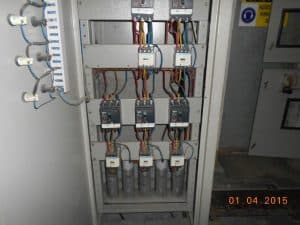
What is an electrical installation certificate?
It is a formal record, signed by the inspecting engineer, that covers an installation or a defined part of one: for example a new factory building, a new substation and main distribution system, or a production floor that has been rewired. It identifies the installation, the supply characteristics and earthing arrangement, the extent of the work covered, the inspections and tests carried out, the results, and any limitations. A schedule of test results and a schedule of inspections are attached.
Bangladesh does not use one single national form for this certificate, so its value depends on who prepares it and how thoroughly the testing is done. A certificate based on measured results and a clear inspection checklist is far more useful than a general statement that the wiring is "satisfactory".
When is an electrical installation certificate needed?
- New installation: at completion, before the installation is energised and handed over to the owner.
- Alteration or extension: when new circuits, panels, machines or a generator or transformer are added.
- Factory compliance: to support DIFE requirements and the electrical section of a factory safety programme.
- Buyer audit: export buyers often ask for test records and certificates as part of electrical safety audits.
- Insurance, sale or lease: to show the condition of the installation to an insurer, buyer or tenant.
What is inspected and tested?
Inspection
- Cable sizes, types and routes compared with the design and the load.
- Selection and rating of circuit breakers, fuses and residual current devices.
- Panel construction, labelling, IP rating, clearances and working space.
- Earthing and bonding conductors, earth pits and lightning protection connections.
- Cable glands, terminations, containment and protection against mechanical damage.
- Single line diagram and circuit charts at each distribution board.
Testing
- Continuity of protective and bonding conductors.
- Insulation resistance between conductors and to earth.
- Polarity and phase sequence.
- Earth electrode resistance.
- Earth fault loop impedance and prospective fault current.
- Operation and trip times of residual current devices.
- Functional tests of switchgear, interlocks, emergency stops and controls.
For a detailed look at individual tests, see our electrical test certificate page.
Which standards apply?
IEC 60364 is the international standard for low-voltage electrical installations, and its verification part sets out the inspection and tests needed before an installation is put into service and at periodic intervals. BNBC 2020 includes electrical requirements for buildings, covering matters such as wiring methods, protection, earthing and distribution. For factories, the Bangladesh Labour Act 2006 and Bangladesh Labour Rules 2015 set duties for electrical safety that DIFE inspects. We state in the certificate which standards the installation was assessed against.
Validity and re-inspection
An installation certificate describes the installation on the day it was tested. After that, the installation should be re-inspected periodically, with shorter intervals for factories, high-load and damp or dusty areas than for homes and offices. Any later alteration needs its own inspection and certificate. For the condition of existing installations, see our electrical wiring certificate.
What you receive
- An electrical installation certificate signed by the inspecting engineer.
- A schedule of inspections and a schedule of test results for every circuit tested.
- A list of defects found and how they were corrected, or remaining observations.
- An as-built single line diagram, where included in the scope.
- A recommended date for the next inspection.
Installation and certification together
If you also need the installation itself designed or built, our electrical installation company service covers supply, installation, testing and commissioning. Where the installer and the certifier should be independent, for example for a buyer audit, we can act purely as the inspecting engineer for work done by others.
Why choose TOTO POWER Engineering?
We have completed more than 500 projects since 2011, with a strong focus on RMG and other industrial clients. Our engineers test with calibrated instruments, record measured values rather than ticks, and explain every defect in plain terms so that it can be fixed.